
January 2026
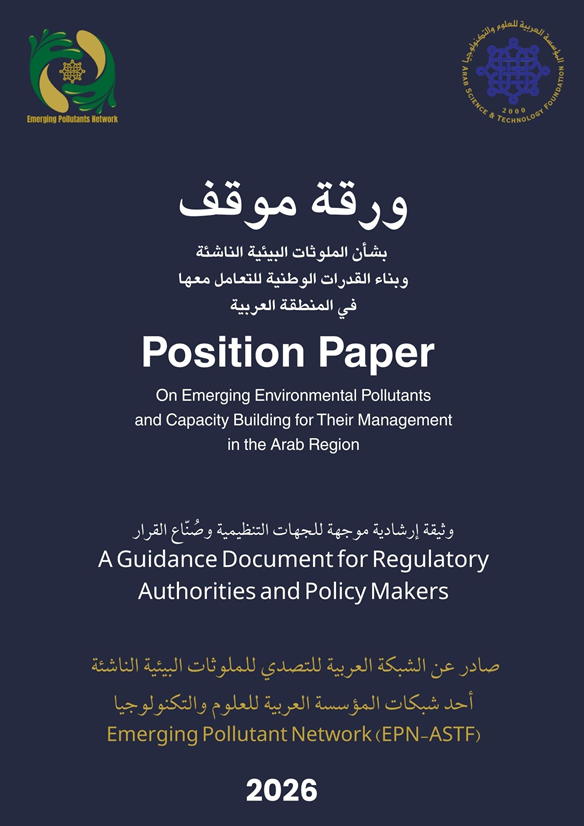
The Arab Network for Emerging Environmental Pollutants (EPN) has announced the release of a specialized Position Paper titled
“Emerging Environmental Pollutants and National Capacity Building in the Arab Region.”
The paper is issued as part of EPN’s role as an independent, voluntary scientific initiative aimed at supporting evidence-based environmental decision-making across the Arab world.
A scientific and regulatory framework for emerging pollutants
The Position Paper addresses the growing challenges associated with emerging environmental pollutants—chemical and biological substances that have not traditionally been included in monitoring programs or regulatory frameworks, despite mounting scientific evidence of their potential impacts on public health and ecosystems.
These pollutants include, among others, per- and polyfluoroalkyl substances (PFAS), pharmaceutical and hormone residues, personal care product chemicals, modern pesticides, and microplastics. The paper stresses that global concern over these substances stems from their persistence, bioaccumulative nature, widespread occurrence, and resistance to conventional treatment technologies, making inaction a long-term environmental and public health risk.
Diagnosing the Arab regional context
The Position Paper highlights several structural challenges that currently hinder effective management of emerging pollutants in the Arab region, including:
EPN’s position: a gradual transition toward preventive management
EPN emphasizes that the current stage requires a carefully phased transition from regulatory absence toward preventive management of emerging pollutants, without imposing unrealistic or immediate obligations on regulatory bodies.
The Position Paper states that the success of any future regulatory framework depends on three parallel pillars:
Capacity building as a strategic priority
A central component of the Position Paper is its focus on capacity building, identified as a cornerstone for sustainable management of emerging pollutants. EPN calls for targeted training programs for:
The paper proposes realistic, low-cost implementation mechanisms, including national partnerships, short and focused training programs, leveraging existing Arab expertise, and integrating capacity-building activities into ongoing research projects.
Phased regulatory recommendations
The Position Paper outlines a graduated set of recommendations, including:
Concluding message
EPN concludes that addressing emerging environmental pollutants is no longer a deferrable option, but a preventive necessity to protect public health and natural resources. The Network stresses that a capacity-driven, partnership-based, and gradual approach represents the most realistic and sustainable pathway for the Arab region.
The release of this Position Paper is intended as a reference milestone, guiding scientific and regulatory dialogue on emerging pollutants and supporting Arab governments in developing balanced, science-based national responses grounded in local capacity and regional priorities.