

November 2025 | Sharjah,
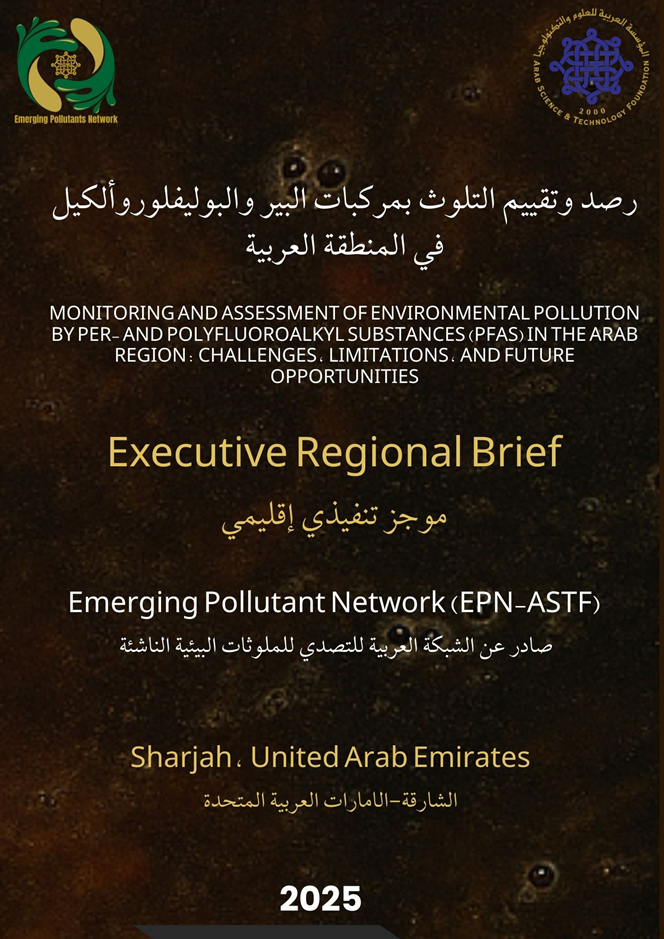
The Arab Network for Emerging Environmental Pollutants (EPN) has released an Executive Regional Brief titled
“Monitoring and Assessment of Environmental Pollution by PFAS in the Arab Region: Challenges, Limitations, and Future Opportunities,” providing policymakers with a concise, decision-oriented overview of one of the most critical emerging chemical risks facing the region.
The brief represents a strategic shift from lengthy academic reporting toward policy-focused communication, designed specifically for ministers, senior officials, regulators, and parliamentary committees who require clear evidence, risk framing, and actionable options.
Key findings highlight major regional gaps
According to the Executive Brief, the Arab region faces a severe shortage of PFAS data and monitoring capacity. Fewer than 15 peer-reviewed Arab studies on PFAS have been published to date, compared with hundreds in Europe and North America. The document also notes that a significant proportion of PFAS analyses conducted in Arab countries rely on overseas laboratories, reflecting limited access to advanced analytical infrastructure such as LC-MS/MS within the region.
The brief underscores that most Arab countries do not yet include PFAS in routine environmental or drinking water monitoring programs, despite growing international evidence linking these “forever chemicals” to endocrine disruption, immune system effects, and long-term environmental persistence.
A direct message to decision-makers
Written in non-technical language, the Executive Brief frames PFAS contamination as a strategic environmental and public health risk, emphasizing the regulatory, economic, and sovereignty implications of delayed action. It contrasts the current regional situation with regulatory developments in the European Union and the United States, where strict limits for PFAS in drinking water are already being implemented.
EPN stated that the purpose of the brief is to translate scientific evidence into a practical decision-support tool, enabling policymakers to understand both the risks of inaction and the benefits of early preventive measures.
Practical and phased recommendations
Rather than calling for immediate regulatory burdens, the brief proposes a phased and realistic roadmap, including:
Bridging science and policy
EPN emphasized that the Executive Regional Brief is intended to bridge the gap between research and governance, supporting a transition from reactive responses to preventive chemical management in the Arab region.
By presenting complex scientific findings in a concise, policy-relevant format, the Network aims to strengthen environmental decision-making, reduce long-term public health risks, and support the development of resilient national systems for managing emerging environmental pollutants.