

May 2025
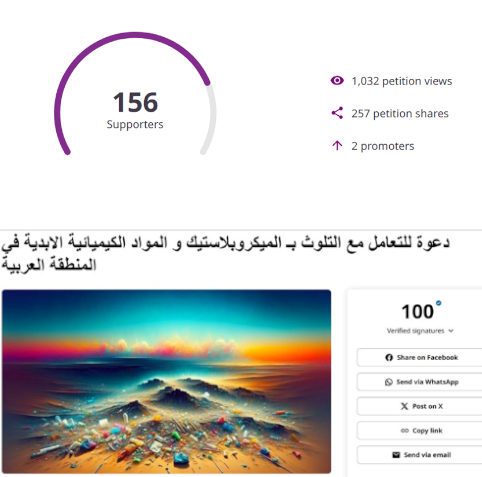
A broad coalition of scientists, environmental advocates, and concerned citizens across the Arab world has launched a petition calling for decisive regional strategies to address pollution by microplastics and persistent chemical contaminants. The online petition—which can be accessed at https://chng.it/6k5tTxSF5W —aims to mobilize public support and influence policy action on emerging pollutants that pose threats to ecosystems, food systems, and human health.
The initiative highlights growing scientific evidence that microplastics and long-lasting synthetic chemicals known as per- and polyfluoroalkyl substances (PFAS) are increasingly found throughout the environment. These contaminants have been documented in coastal waters, agricultural soils, seafood, drinking water, air, and even in human biological samples collected in various regions.
Urgent call for coordinated regional action
Supporters of the petition argue that the rapid pace of urbanization, expanding chemical production, and rising plastic consumption in the Arab region have outpaced existing regulatory frameworks. As a result, calls to tackle pollution from microplastics and PFAS are growing louder in public discourse.
The petition sets out a series of key demands, including:
Signatories stress that such actions are crucial to protecting both human health and the integrity of terrestrial and marine ecosystems. They also note the cost-effective benefits of early preventive action compared with long-term remediation and healthcare burdens.
Scientific evidence and health concerns
A growing body of international research has linked microplastics and PFAS to potential health effects, ranging from immune disruption and endocrine interference to developmental and metabolic impacts. Although current data on direct health outcomes remain limited, experts say that precautionary approaches are justified given the widespread presence of these materials in the environment and food chains.
Scientists behind the petition underscore that exposure occurs through multiple pathways, including ingestion of contaminated food and water, inhalation of airborne particles, and dermal contact with consumer products. They also highlight significant data gaps in regional assessments, particularly regarding long-term exposure and cumulative health risks.
Broad engagement and future impact
The online platform allows individuals, academics, and professionals from across the Arab region and beyond to add their signatures and support the cause. Organizers plan to use the petition to engage policymakers, environmental agencies, and regional cooperation bodies, emphasizing that public backing reflects a growing awareness and demand for action on environmental health issues.
Environmental advocates emphasize that this moment presents an opportunity for the Arab region to lead in evidence-based environmental stewardship, aligning with global efforts to manage persistent pollution and safeguard future generations.
This petition follows similar global movements calling for substantive regulation on microplastics and PFAS, reinforcing the need for regionally adapted solutions, informed by science and guided by public interest.